
Bachelor's Degree Completed — What Next? A Practical Guide for Students
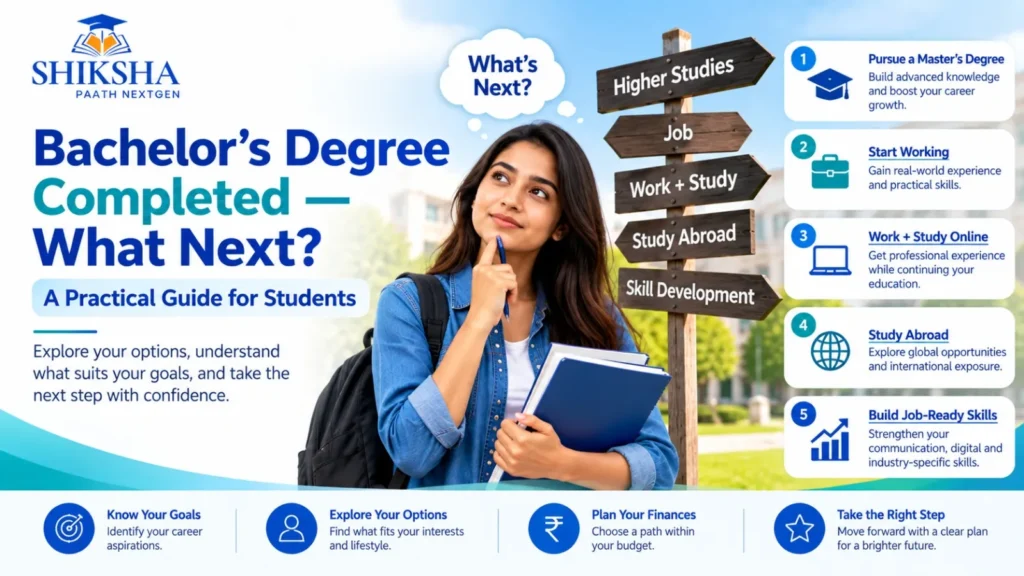
Finishing graduation often creates another big question:
“What should I do next?”
There isn’t one answer that works for everyone. A useful starting point is to identify your desired career outcome.
Option 1: Pursue a Master’s Degree
If your target career benefits from advanced academic knowledge, consider programmes such as MBA, MCA, M.Com, MA or other relevant postgraduate qualifications.
Option 2: Start Working
Getting professional experience immediately after graduation can help you develop practical skills and understand which career path interests you.
Option 3: Work + Study Online
Students who want professional experience alongside higher education can explore recognised online programmes that provide sufficient flexibility.
Option 4: Study Abroad
If international education aligns with your goals and finances, research suitable countries, universities, programmes, scholarships and visa requirements.
Option 5: Build Job-Ready Skills
A degree alone isn’t the entire career journey. Communication, interview preparation, resume writing, digital skills and industry-specific abilities can all be valuable.
Before deciding, ask yourself:
What career do I want?
Which qualification does that career require?
What can I realistically afford?
Do I want to work while studying?
Where do I want to be professionally in 3–5 years?
Once these answers become clearer, choosing your next step becomes much easier.
ShikshaPaath Tip: Don’t pursue another degree simply because you’re unsure what to do next. First define the career direction, then choose the education path.